
Specialists in
Stainless and Mild Steel Exhausts, shocks, brakes, clutches, Turbo and Flange Gaskets & all General Maintenace including servicing
About Exhaust Shoppe
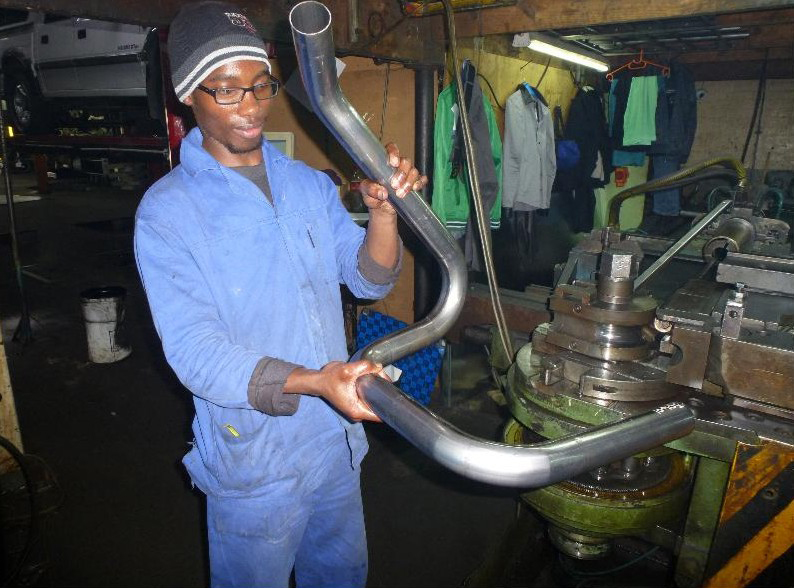
Exhaust Shoppe is a specialised fitment centre, based in Pietermaritzburg, Kwazulu Natal that has been under the same management for over 30 Years. Here Exhaust Shoppe manufactures a wide range of mandral bent branches/headers, manifold gaskets, as well as a range of universal silencers, free flow, two flow, tri flow and mechanical, in Aluminised Mild Steel and 409 Stainless Steel, all under the brand name “Scorpion”.
These branches/headers, gaskets, universal silencers are available at Exhaust Shoppe and distributed to many other fitment centres in Kwazula Natal from either their warehouse in Pietermaritzburg or Durban.
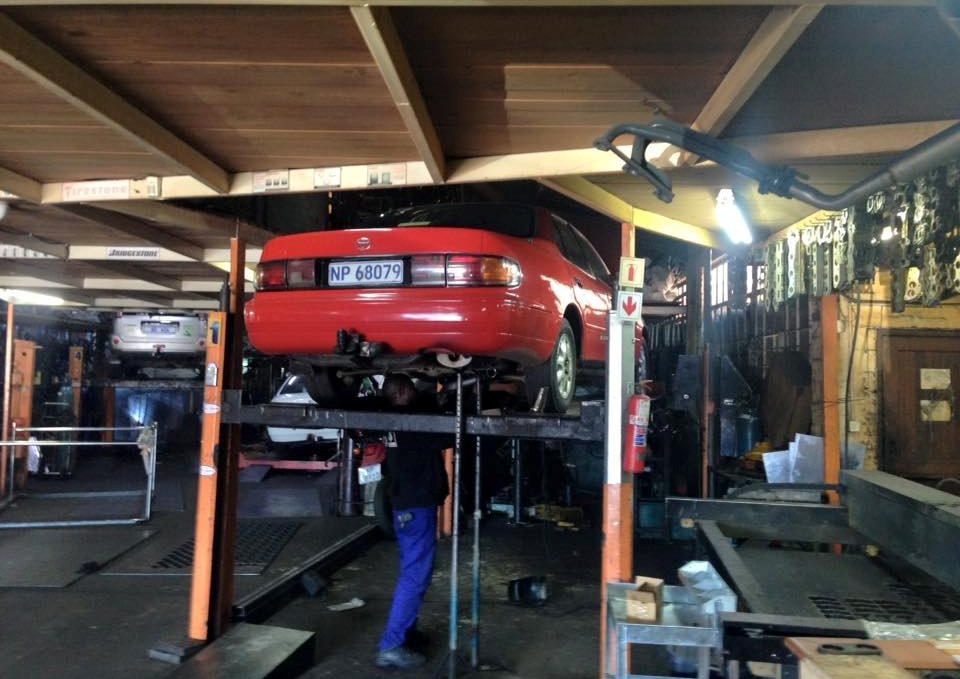
Exhaust Shoppe’s aim is to provide exhaust fitment centres with the largest range of branches/headers, gaskets, universal silencers. Shocks, brakes, clutches, and all general maintenance including services are also done on site at 278 Hoosen Haffejee (Berg) Street, Pietermaritzburg.


Contact us now to order high quality branches, turbo and flange gaskets, silencers, mountings and flexpipes
Products
Scorpion Products include a wide range of manufactured mandral bent branches/headers, manifold, turbo and flange gaskets, as well as universal silencers, free flow, two flow, tri flow and mechanical, in Aluminised Mild Steel and 409 Stainless Steel.
All being available from either of the warehouse’s in Pietermaritzburg or Durban.
Mandral Bent Branches / Headers and Manifold Gaskets
Every branch is inspected and checked for leaks, and then skimmed. Advantage no pressure on pipes and less chance of cracking, Also gasket will seal properly.
Scorpion branches carry a 1 year or 60,000 km warranty. Heat wrapping on branch manifolds renders the warranty null and void. Proof of sale showing part numbers must accompany any claims.
Beware of Imitations
Up to 25% flow can be lost on a branch manufactured on a normal pipe bender.

Normal Bender
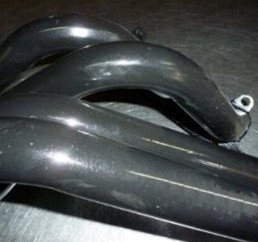
Mandral Bender
Manifold and flange gaskets are cut using non asbestos material. Gaskets can be cut to your specifications or alternatively to a sample or detailed drawing.
Universal Silencers
M/Steel = 1 Year
S/Steel = 5 Years Warranty
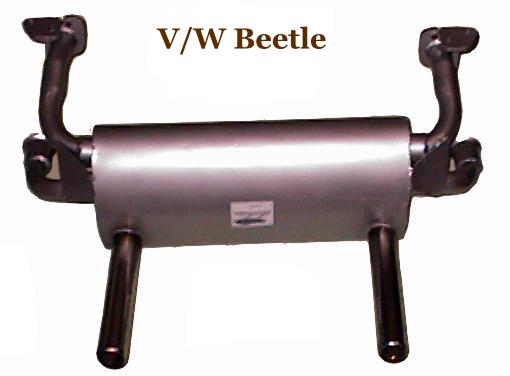
Silencer Specifications: No rolled ends. All seams are welded therefore “No Leaks” using 1mm outer casing and 1.2mm end caps making them the strongest silencers available. All silencers are manufactured as close to oe specs as possible. We are able to manufacture any silencer to your own specs, excl big trucks.


Turbo and Flange Gaskets, Mountings and Flex Pipes
We stock an extensive range of high-quality turbo, and flange gaskets. Our quality gaskets maintain optimal pressure levels for efficient turbo-charged engine operation, contributing to the overall performance and longevity of the exhaust system.


Stockist oF
Alfa, Audi, BAW, BMW, Cherry, Chevrolet, Chrysler, Citroen, CMC, Cummins, Daewoo, Daihatsu, Datsun, Fiat, Ford, Foton, GWM, Havaal, Hino, Honda, Hummer, Hyundia, Isuzu, John Deere, Jeep, JMC, Kia, Lada, Landrover, Lexus, Leyland, Mahindra, Mazda, Mini, MG, Mitsubishi, Nissan, Opel, Peugeot, Proton, Renault, Saab, Seat, Subaru, Suzuki, ROVER, Suzuki, Tata, Toyota, Volkswagen, Volvo…and more

Very friendly staff and good advice
Nabeel
Helpful, polite, knowledgeable and seriously dedicated to their craft
Conrad
Excellent service and knowledge
Keston
Catalogues
Please return for updates to our catalogues regularly as new products are always added
Technical Information
blank
How does an exhaust silencer work
The pulsating flow from each cylyinder’s exhaust process of an automobile petrol or diesel engine sets up pressure waves in the exhaust system-the exhaust port and the manifold having average pressure levels higher than the atmospheric. This varies with the engine speed and load. At higher speeds and loads the exhaust manifold is at pressures substantially above atmospheric pressure. These pressure waves propagate at speed of the sound relative to the moving exhaust gas, which escapes with a high velocity producing an objectionable exhaust boom or noise.
A suitably designed exhaust silencer or muffler accomplishes the muffling of this exhaust noise. The basics of silencing can be understood by recalling a few principles of physics. The velocity of sound in the gas at a given temperature is directly proportional to the square root of the product of the pressure and the ratio of the specific heats (at constant pressure to that at constant volume), and inversely to the square root of the density of the gas.
As the temperature varies, the velocity also varies directly as the temperature by another square root law involving the product of the coefficient of thermal expansion of the gas and the temperature. The exhaust noise can be reduced appreciably by providing resonance chambers to offset the noise wave effects.
This is accomplished by the principle of the Helmholtz resonator. In principle, it comprises the exhaust pipe, which goes through the large volume of a chamber.
The axial holes in the exhaust pipe enclsed by the chamber allow the gases to vibrate with the large mass of the gases in the chamber (forming a spring-mass vibrating system) and generate the sound of the same frequency but in opposite phase to that which has to be nullified (called anti-sound).
To achieve this the muffler volume should be proportioned to the engine displacement, and inversely proportioned to the engine speed and the square root of the number of engine cylinders. The usul length to diameter (i/d) ratio of the resonator is about 4:1 to 8:1.
A small i/d ratio muffler attenuates the sound well for a narrow frequency band, where as the large i/d muffler attenuates the sound to a lessor degree but over a wider frequency band. The effectiveness of the exhaust system in silencing the exhaust depends also on the relative lengths of the exhaust pipe (from the exhaust manifold to the muffler) and the tail pipe. A ratio of 1:2 is better than 4:1, and 1:1 is the poorest ratio.
Since the narrow frequency range limits the resonant chamber application, other features are incorporated in the resonant chamber to produce friction effects and filter off noise effects of other offending frequencies. Provision of baffles, resonator mufflers with end baffles, resonator with centre baffle chamber and 4-chamber muffler are illustrative examples. In early stationary engines, muffling of the sound was accomplished by allowing the gases to expand by changing the direction of flow or by cooling them with injecter water.
Exhaust Theory
We’ve seen too much misinformation regarding exhaust theory. What kind of misinformation? For starters, there are a lot of people in the “BIGGER IS BETTER” camp. We’re talking about exhaust pipe diameters. Even the big magazine editors are boldly smattering statements like, “For a turbo car, you can’t get an exhaust pipe that’s too big.” Also, terms like “backpressure” and the statement, “An engine needs backpressure to run properly!” really rub us the wrong way.
Lets start from the beginning. What ia an exhaust system? Silly quaestion? Not hardly. Exhaust systems carry out several functions. Among them are:
1. Getting hot, noxious exhaust gasses from your engine place away from the engine compartment;
2. Significantly attenuating noise output from the engine;
3. In the case of modern cars, reduce exhaust emissions.
Hardware
In order to give you a really good idea of what makes up an exhaust system, let’s start with what exhaust gas travels through to get out of your car, as well as some terms and definitions:
After your air/fuel mixture (or nitrous/fuel mixture) burns, you will obviously have some leftovers consisting of a few unburned hydrocarbons (fuel), carbon monoxide, carbon dioxide, nitrogen oxides, sulfur dioxide, phosphorus, and the occasional molecule of a heavy metal, such as lead or molybdenum. These are all in gaseous form, and will be under a lot of pressure as the piston rushes them out of the cylinder and into the exhaust manifold or header. They will also be hotter ‘n Hades. (after all, this was the explosion of an air/fuel mixture, right?). An exhaust manifold is usually made of cast iron, and its primary purpose is to funnel several exhaust ports into one, so you don’t need four exhaust pipes sticking out the back of your Car.
Exhaust manifolds are usually pretty restrictive to the flow of exhaust gas, and thus waste a lot of power because your pistons have to push on the exhaust gasses pretty hard to get them out. So why does virtually every new automobile sold have exhaust manifolds?. Because they are cheap to produce, easy to install. Real cheap. Real easy.
“Ok,” you ask, “so now what?” Ah, good thing you asked.The performance alternative to the exhaust manifold is a header / branch. Whats the difference?. Where a manifold usually has several holes converging into a common chamber to route all you gasses, a header / branch has precisely formed tubes that curve gently to join your exhaust ports to your exhaust pipe. How does this help?. First of all, as with any fluid, exhaust gasses must be treated gently for maximum horsepower production. You don’t want to just slam-bang exhaust gas from your engine into the exhaust system. Secondly, a header / branch can be tuned to slightly alter your engines characteristics. We’ll go in-depth into header tuning a little later.
Nextly, exhaust gasses exit from your manifold or header, travel through a bit of pipe, then end up in the catalytic converter, or cat. The cats main job is to clean up some harmful chemicals from your exhaust gas so they don’t end up in your lungs. In most cars, they also do a great job of quieting things down and giving any exhaust system a deeper, mellow tone. You’ll see a lot of Self-Proclaimed Master Technicians (SPMT’s) telling people that removing a cat will get you tons o power. There’s room for debate on this, but in our experiance, removing a catalytic converter from a new car won’t gain you much in the horsepower department. If you drive an OBD-II equiped car,you’ll also get that annoying CHECH ENGINE light burning up your dashboard.
From the catalytic converter, the exhaust gasses go through a bit more pipe and then into a muffler/silencer, or a system consisting of several mufflers/silencers and/or resonators.
Are you a muff?
Exhaust gases leave the engine under extremely high pressue. If we allowed exhaust gasses escape to the atmosphere directly from the exhaust port, you can well imagine how loud and cop-attracting the noise would be. For the same reason gunshots are loud, engine exhaust is loud. Mufflers take care of the silencing chores by three major methods: Absorption, Restriction, and Reflection. Mufflers can use one method, or all three, to attenuate sound that is not so pleasing to the ears of the Highway Patrol. Simply put Absorption silencers consist of a perforated tube that goes through a can with a packing material such as fiberglass or steel wool. These are normally referred to as freeflow silencers. Restriction and reflection silencers refer to either two-flo, tri-flow or mechanical silencers.
The exhaust pulse
To gain a more complete understanding of how mufflers and headers do their job, we must be familiar with the dynamics of the exhaust pulse itself. Exhaust gas does not come out of the engine in one continuous stream. Since exhaust valves open and close, exhaust gas will flow, then stop, and then flow again as the exhaust valve opens. The more cylenders you have, the closer together these pulses run.
Keep in mind that for a “pulse” to move, the leading edge must be of a higher pressure than the surrounding atmosphere. The “body” of a pulse is very close to ambient pressure, and the tail end of the pulse is lower than ambient. It is so low, in fact, that it is almost a complete vacuum! The pressure differential is what keeps a pulse moving.
A good Mr Wizard experiment to illustrate this is a coffee can with the metal ends cut out and replaced with the plastic lids. Cut a hole in one of the lids, point it toward a lit candle and thump on the other plastic lid. What happens?. The candle flame jumps, then blows out. The “jump” is caused by the high-pressure bow of the pulse we just created, and the candle goes out because the trailing portion of the pulse doesn’t have enough oxygen-containing air to support combustion.
OK, now that we know that exhaust gas is actually a series of pulses, we can use this knowledge to propagate the forward-motion to the tailpipe.
Just as Paula Abdul will tell you that opposites attract, the low pressure tail end of an exhaust pulse will most definitely attract the high-pressure bow of the following pulse, effectively “sucking” it along. This is what’s so cool about a header/branch. The runners are far longer than a normal manifold which allow the exhaust pulses to suck each other along.
Pipe Sizing
We’ve seen quite a few “experienced” racers tell people that a bigger exhaust is a better exhaust. Hahaha….NOT
As discussed earlier, exhaust gas is hot. And we’d like to keep it hot throughout the exhaust system. Why? The answer is simple. Cold air is dense air, and dense air is heavy air. We don’t want our engine to be pushing a heavy mass of exhaust gas out of the tailpipe. An extremely large exhaust pipe will cause a slow exhaust flow, which will in turn give the gas plenty of time to cool off en route.
Backpressure the myth and why its wrong
One of the most misunderstood concepts in exhaust theory is backpressure. People love to talk about backpressure on message boards with no real understanding of what it is and what it’s consequences are. I’m sure many of you have heard or read the phrase “Engines need backpressure” when discussing exhaust upgrades. That phrase is in fact completely inaccurate and a wholly misguided notion.
Some basic exhaust theory
Your exhaust system is designed to evacuate gases from the combustion chamber quickly and efficently. Exhaust gases are not produced in a smooth stream: exhaust gases originate in pulses. A 4 cylinder motor will have 4 distinct pulses per complete engine cycle, a 6 cylinder has 6 pulses and so on. The more pulses that are produced, the more continuous the exhaust flow. Backpressure can be loosely defined as the resistance to positive flow – in this case, the resisantance to possitive flow of the exhaust stream.
Backpressure and velocity
Some people operate under the misguided notion that wider pipes are more effective at clearing the combustion chamber than narrower pipes. It’s not hard to see how this misconception is appealing – wider pipes have the capability to flow more than narrower pipes. So if they have the ability to flow more, why isn’t “wider is better” a good rule of thumb for exhaust upgrading? In a word – VELOCITY.
I’m sure that all of you have at one time used a garden hose without a spray nozzle on it. If you let the water just run unrestricted out of the hose it flows at a rather slow rate. However, if you take your finger and cover part of the opening, the water will flow out at a much faster rate.
The astute exhaust designer knows that you must balance flow capacity with velocity. You want the exhaust gases to exit the chamber and speed along at the highest velocity possible – you want a FAST exhaust stream. If you have two exhaust pulses of equal volume, one in a 2″ pipe and one in a 3″ pipe, the pulse in the 2″ pipe will travel considerably FASTER than the pulse in the 3″ pipe.
While it is true that the narrower the pipe, the higher the velocity of the exiting gases, you want to make sure the pipe is wide enough so there is as little backpressure as possible while maintaining suitable exhaust gas velocity. Backpressure in it’s most extreme form can lead to reversion of the exhaust stream – that is to say the exhaust flows backwards, which is not good. The trick is to have a pipe that is as narrow as possible while having as close to zero back pressure as possible at the RPM range you want your power band to be located at. Exhaust pipe diameters are best suited to a particular RPM range. A smaller pipe diameter will produce higher exhaust velocities at a lower RPM but create unacceptably high amounts of backpressure at high RPM. Thus if your powerband is located at 2-3000 RPM, you want a narrower pipe than if your powerband is located at 8-9000 RPM.
Many engineers try to work around the RPM specific nature of pipe diameters by using setups that are capable of creating a similar effect as a change in pipe diameter on the fly. The most advanced is Ferrari’s which consists of two exhaust paths after the header – at low RPM only one path is open to maintain exhaust velocity, but as RPM climbs and exhaust volume increases, the second path is opened to curb backpressure – since there is greater exhaust volume there is no loss in flow velocity.
So how did this myth come to be?
I often wonder how the myth “engines need backpressure” came to be. Mostly I believe it is a misunderstanding of what is going on with the exhaust stream as pipe diameters change. For instance, someone with a Honda civic decides he’s going to upgrade his exhaust with a 3″ diameter pipe. Once it’s done the owner notices that he seems to have lost a good bit of power throughout the powerband. He makes the connections in the following manner: “My wider exhaust eliminated all backpressure but I lost power. Therefore the motor must need some backpressure in order to make power.” what he did realize is that he killed off all his flow velocity by using such a ridiculously wide pipe. It would have been possible for him to achieve close to zero backpressure with a much narrower pipe – in that way he would not have lost all his flow velocity.
So why is exhaust velocity so important?
The faster an exhaust pulse moves, the better it can scavenge out all the spent gasses during valve overlap. The guiding principles of exhaust pulse scavenging are a bit beyond the scope of this document but the general idea is a fast moving pulse creates a low pressure behind it. This low pressure area acts as a vacuum and draws along the pulse behind it. If the pipe diameter is too big the vacuum behind the pulse pulls it back instead of drawing the following pulse forward with it.
Contact Us
278 Hoosen Haffejee (Berg) Street,
Pietermaritzburg, 3201
Tel: 033 3942 961
Fax: 033 3948 958